Engaging With the World

Photo by Dibakar Roy on Pexels

Living in a Broken World (2019)

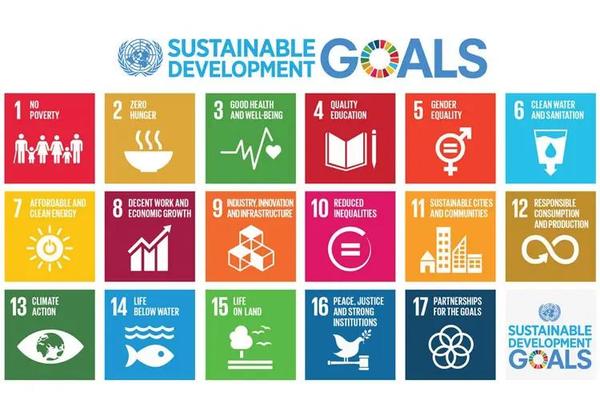
This paper is trying to show that our current situation on Earth is going to collapse phase and broken. Sustainable Development Program (SDG) can’t give real action to resolve environmental, social, and economic problems such as poverty, biodiversity extinction, health, war and genocide, climate change, etc. On the other hand, the author describes that SDG only focuses on the technical solution and randomly decided criteria and standards for defining knowledge. Therefore, the author is seeking to encourage SDGs to see the problem from a wider point of view on this paper. .
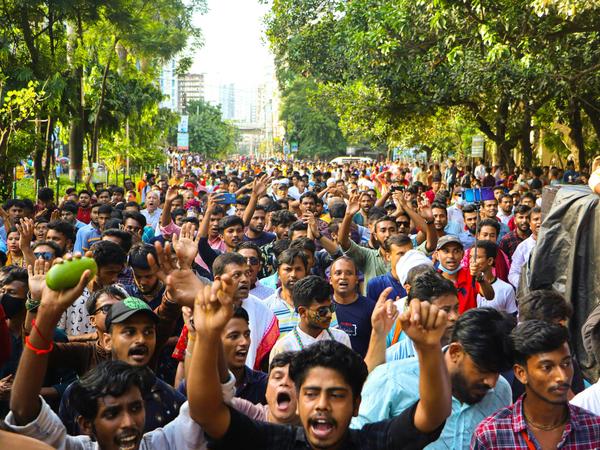
Photo by ISKCON TV Dhaka on Pexels

Notes on the Teaching of Sociology (1996)

The Islamic scholar Ibn Khaldun (1332-1406) introduced his science of society (Ba-Yunus and Ahmad 1985:24) about four centuries before the Frenchman, Auguste Comte. However, it is Auguste Comte that
generations of sociologists in Asia, Africa and Latin America recognise as the titular founder of Sociology. This historical inaccuracy is maintained—on the basis of an unequal relationship between the 'West'
and the 'Rest of the World'—as a given in the global system of production of (sociological) knowledge.
There is a growing recognition of the significance of knowledge produced by people of the developing world. In this effort, tradition is receiving increased attention. Such a complex effort is necessarily multi- faceted. It has to: i) re-interpret/re-invent tradition in order to influence or characterise the present and future, ii) develop culture-specific knowledge systems that establish and sustain a continuity with the past intellectual traditions and iii) produce a less violent, and more dialogical, form of knowledge in comparison to Western knowledge. The first two are also part of the contemporary movement to assert cultural identity.
Photo by Muhammad Hary on Pexels

Five Theses on ASEAN, Spirituality and Sustainability (2016)

Beyond the glitter and glamour of ASEAN, we come face to face with threats to Mother Earth. ASEAN is still in the stranglehold of the mindless growth paradigm, completely seduced by the recycled futures of the so-called developed world. We need about 6 Earths to maintain this direction. All the talk of ASEAN sustainable development is still done within the growth paradigm...Even considering how to turn the sustainable
development effort into a huge economic, for-profit endeavour!!! The most unfortunate thing in all these is the rate of destruction of forests, and changes in land-use, in ASEAN, and in Asia in general -- it is pretty serious, with about 92,000 hectares of forest disappearing every year. We are all under a serious delusion that this is progress and that we are bringing "civilisation" to all people, including the indigenous
people. This delusion is destructive. It is a destructive ripple that will move through generations to come, ripping their futures apart.
Photo by Tuan Vy on Pexels

Diaspora and Nostalgia: Towards a Cultural Theory of Indian Diaspora (2018)

Today, there is a visible global presence of a transnational community of Indians. For centuries, Indians have left the Indian subcontinent, their 'historical homeland', and settled in many countries across the globe. A large section of this group belongs to labour dispersed for the purpose of maintaining colonial interests. This paper is broadly about the transnational community of Indians in general and the component of that community dispersed by colonialism. Studies on the transnational community of Indians began around the middle of this century and increased in number by the 60s and 70s. During this period, studies did not focus on the community as a whole in an integrated fashion. Because of this trajectory of studies on the community, a comprehensive theory of it could not be developed. Prof. R.K. Jain observes in a recent
book of his that the studies on the community have yielded only 'a few detailed monographs and comparative essays'. He adds that there has been a search for a theoretical framework to integrate this area of work. Thus, in a sense, this paper is an attempt to contribute to the creation of such a theory.
pixabay.com

Reflections on The Paradox of 'Good Intentions' in a Violent Order (2025)

We plant trees while simultaneously supporting, through our indiscriminate consumption behaviour, distant extractive industries that despoil the earth. We raise voices for peace, yet rely on intricate supply chains and resource networks built on exploitation far beyond our sight or support the war industry that spreads destruction and death through our taxes. Our daily acts of kindness, so often celebrated, risk complicity in perpetuating suffering precisely because they remain disconnected from the complex layers of structures that generate gross injustice. This is the crux of our predicament. Is not goodness, then, haunted by complicity? Is there, behind every act of compassion, many acts of cruelty we are not aware of?

The Anwar Debacle and the Potential for Democratic Reforms in Malaysia (1999/Co-Authored)

Certain events in the life of a nation have the profound effect of galvanising the simmering discontent of its people into a political force to be reckoned with. In the last two decades, Malaysia has witnessed two such critical historical moments. Perhaps it is
not by accident that both these events emanate from a political rivalry for leadership of the dominant party of the ruling Barisan Nasional (National Front), the United Malay National Organization (UMNO), the party that defends and promotes the interests of the Malay community. Specifically both these events resulted as a consequence of a political challenge or perceived political opposition to UMNO President and Prime Minister of 19 years Dr Mahathir Mohamed’s leadership of the party. The impact of such a state of affairs and its ramifications are not confined to UMNO. In Malaysia it is important to note that a political upheaval in UMNO, or more generally turbulence in Malay politics, has a critical impact on the Malaysian polity. Thus, whether Malaysia embraces "guided democracy", authoritarian rule or undertakes democratic reforms is rooted and shaped by developments in UMNO and Malay politics.
pixabay.com

Should We Re-think The Nature Of Social Work? (2014)

To begin with, all work is social. So what is distinctive about 'social work’? First, is social work, ‘work’ at all? Should it be work, as we understand ‘salaried work’ today? What kind of work could it be for it to be social work? And if it is work with the social, what is this ‘social’ we are referring to? Is it static? Is it changing? Is there
‘one social’ or ‘many socials’? And what is the nature or method of intervention in the social? What is the nature of relationship between social work and the social? And, as some among us would understand, for work to be called social work, should it not be served spiritually and selflessly? And what is the purpose of social work, or what ends do we expect from engaging with it? These questions are often taken for granted, even seen as a waste of time, but seeking answers for them actively orient our approach to social work, ways we carry it out and/or transform it, when and where necessary.

AI, Technology and Compassion(Version 1/2025)

I clearly see the value of Technology/technologies. But I am not a great enthusiast of ‘runway Technology or technologies’. I do not see technology as a solution to the significant and pressing or painful human or spiritual problems we face today (many of which are exacerbated by overestimating ‘human intelligence’). And I do not think AI, as we know it today, is the pinnacle of our intelligence and technological advancement or achievement. Every generation likes to think that the technology it had was the pinnacle. Even the communities we call ‘tribal’ had great technologies.

Lessons Inspired by Laudato Si (2020)

Laudato Si’: On the Care of Our Common Home is the second encyclical of Pope Francis, released in 2015
(around the same time as UN SDGs). It is an urgent call to care for Mother/Sister Earth i.e. our Common Home so that all life on Earth will flourish. It is addressed not only to all Catholics but also to all human beings. It is written to encourage dialogues with every person — Christians and non-Christians, as well as atheists.
Photo by Lara Jameson on Pexels

Hate Speech Threatens Our Humanity (2019-Co-Authored)

The rhetoric of hatred has been echoed and thus amplified by traditional as well as social media, including the increasingly vicious culture online, as rivals compete to outdo one another, vying for attention.But often, even more aggressive and vicious is the hate rhetoric of the rising cultural populists, as they manufacture new language to outdo one another and the incumbents, while trying to unify their ‘imagined communities’ behind them.